A software product can become extinct if it fails to build a strong customer base, and that is obvious. However, customer adoption is not the only factor that determines whether a product survives. There are several internal factors that can slowly push a software product toward irrelevance and eventual failure. The intention of this blog is not to be pessimistic, but to highlight a ground reality: weak engineering practices can gradually slow down the progress of software and eventually derail a running business. Many products do not fail because the idea was wrong, but because the software supporting the business becomes increasingly difficult to evolve.
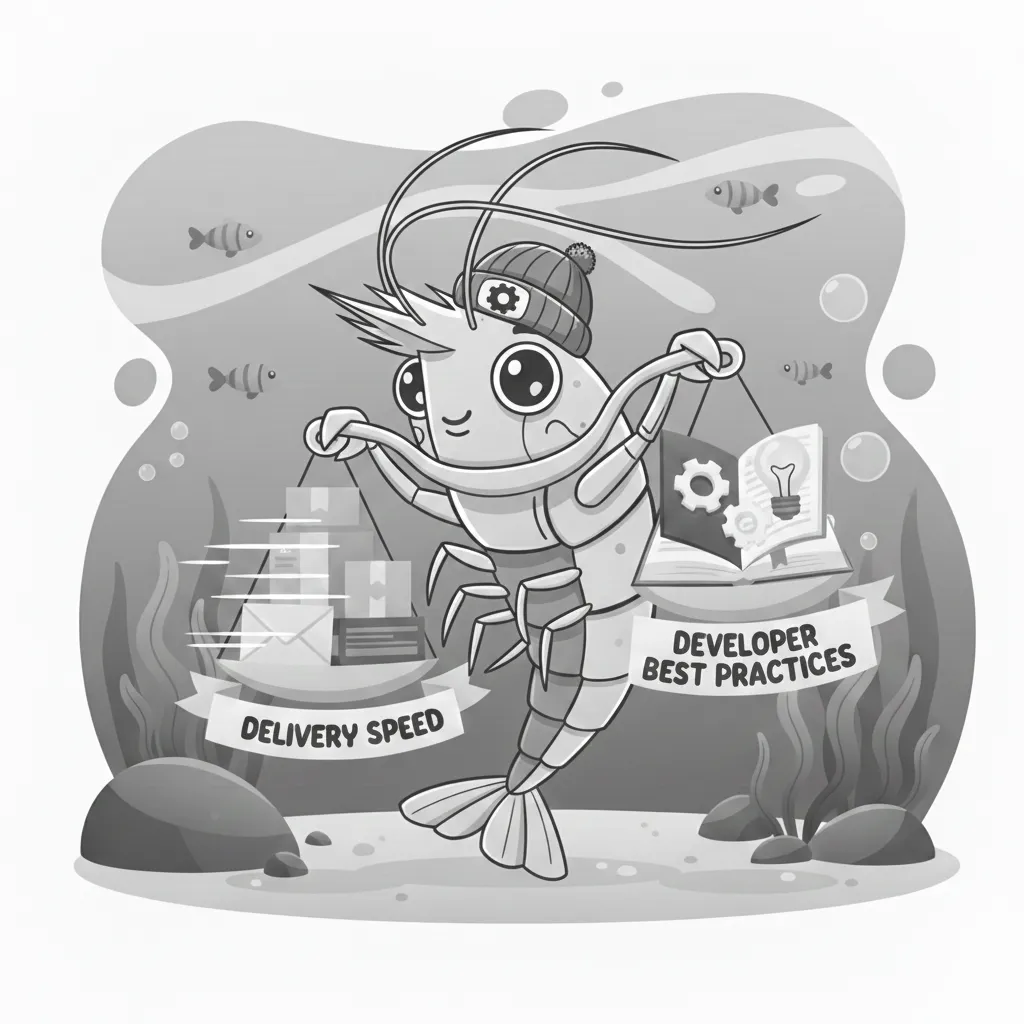
Engineering, in general, is a discipline driven by decision making. Every engineering effort involves choosing between trade-offs to achieve a desired outcome. In software engineering, one of the most significant trade-offs exists between delivery speed and development practices. Software is ultimately built for business, and business requirements should remain the primary objective. Technology choices and technical elegance, while important to developers, come second.
However, when business urgency drives the entire software development lifecycle, the speed at which features reach production often increases to a point where teams begin compromising on practices that make software sustainable. These compromises may appear small or harmless initially, but even minor deviations accumulate over time. Gradually, these decisions compound and begin affecting productivity, stability, and scalability. Much like the butterfly effect, small shortcuts taken today can eventually contribute to the decline of a product, even if the business itself continues to exist.
Developer Experience Starts With Project Setup
One of the earliest indicators of a healthy engineering culture is the ease with which a developer can set up the project locally. Software development is a cognitively demanding activity, and new developers frequently join projects to build features or fix existing issues. The first interaction a developer has with a system is not the code itself, but the setup experience. If setting up the project takes hours, it immediately creates an impression that working within the codebase will be equally complex and time-consuming. Cognitive friction begins before meaningful development even starts. On the other hand, when a project can be set up quickly and reliably, developers subconsciously associate that ease with the overall development experience. Even complex features begin to feel achievable because the initial barrier to entry is low. Faster setup leads to quicker experimentation, shorter testing cycles, and improved development momentum.
Technical Debt Can Quietly Kill a Product
Technical debt is another silent factor that can gradually kill a product. Discussions around technical debt have existed since the early days of software engineering, yet it continues to be underestimated.
One major aspect of technical debt is failing to upgrade the technology stack. Programming languages, frameworks, and dependencies evolve continuously, often introducing security patches, performance improvements, and better resource utilization. Teams that postpone upgrades eventually find themselves stuck on outdated systems that are harder to maintain. New developers joining the team may already be familiar with modern versions of technologies, and working with legacy stacks increases onboarding difficulty and slows productivity. Over time, organizations may even struggle to find engineers willing to work on obsolete technologies.
Another dimension of technical debt appears in performance decisions made during early development. In the interest of faster delivery, teams often implement the most straightforward solution to a problem. At small scale, inefficient memory or CPU usage may not appear significant. However, as the system grows, these inefficiencies surface as bottlenecks that impact performance and infrastructure costs. What once seemed like a harmless shortcut becomes a scalability limitation. Code reviews should therefore evaluate not only correctness but also efficiency and long-term maintainability, because small resource savings across multiple components can significantly improve overall system performance.
Observability is another area that teams tend to ignore in the early stages of development. Logging and monitoring rarely feel urgent when systems are small and predictable. As software grows in complexity, however, the absence of proper logs becomes a major obstacle. Debugging issues without sufficient observability slows developers down and often requires redeploying code just to understand failures. This repeated cycle increases development fatigue and reduces team efficiency. Modules lacking proper logging frequently undergo repeated development cycles simply to diagnose problems that could have been identified quickly with better instrumentation.
Documentation Is as Important as Code
Documentation plays an equally critical role in the longevity of software systems. Consider a junior developer assigned to work on an existing codebase. They may know the feature they need to build and have access to the repository along with instructions to run the application locally, yet they lack an understanding of the system's architecture, deployment strategy, or business workflows. Without technical and business documentation, developers spend unnecessary time rediscovering knowledge that already exists within the team. Architecture decisions, API behavior, and design intentions remain locked in the minds of a few individuals. Documentation is often neglected because it feels unnecessary during early development, but it is not written for the present developer-it is written for future contributors. When documentation is missing, teams unintentionally create knowledge bottlenecks where certain individuals become permanent points of contact, repeatedly explaining the same concepts. This dependency structure slows development and creates avoidable operational friction.
Deployment Strategy Determines Execution Speed
Deployment strategy is another factor that significantly affects the speed of execution within engineering teams. Traditional manual deployments on multiple virtual machines introduce delays and increase the likelihood of human error. Even small configuration changes may require manual intervention across several servers, consuming valuable engineering time. Testing cycles slow down because deployments themselves become cumbersome. Modern practices such as containerization, orchestration, and CI/CD pipelines transform this process by automating build and deployment workflows. What once required hours of manual effort can be completed in minutes. Faster deployments encourage experimentation, improve feedback loops, and allow businesses to respond quickly to changing requirements. In this sense, modernization of deployment strategy is not merely a technical improvement but a strategic advantage for the business.
AI-Driven Development - What Comes After
With the rise of AI coding agents, many of these concerns appear to be less significant at first glance. Code generation is becoming faster, documentation can be produced on demand, and business requirements themselves can serve as prompts that guide development. Agent-driven development emphasizes rapid execution and shortened delivery cycles. However, these advancements do not eliminate the need for strong engineering practices. AI systems operate effectively only when context is structured and systems are understandable. When human developers remain part of the development loop-as they inevitably will-the absence of documentation, observability, and clear development workflows continues to create cognitive overload. AI can accelerate development, but it cannot replace the need for clarity, maintainability, and thoughtful system design.
Conclusion
Software products rarely fail overnight. More often, they decline gradually due to accumulated friction within the engineering process.
Difficult onboarding experiences, growing technical debt, missing documentation, inefficient deployment strategies, and lack of observability
slowly reduce a team's ability to evolve the product. These problems are especially pronounced in SaaS products with complex workflows,
where continuous iteration is essential. Strong engineering practices are not merely idealistic principles; they are survival mechanisms that
allow software to evolve alongside the business it serves. Businesses may thrive on speed, but software survives on sustainability.